
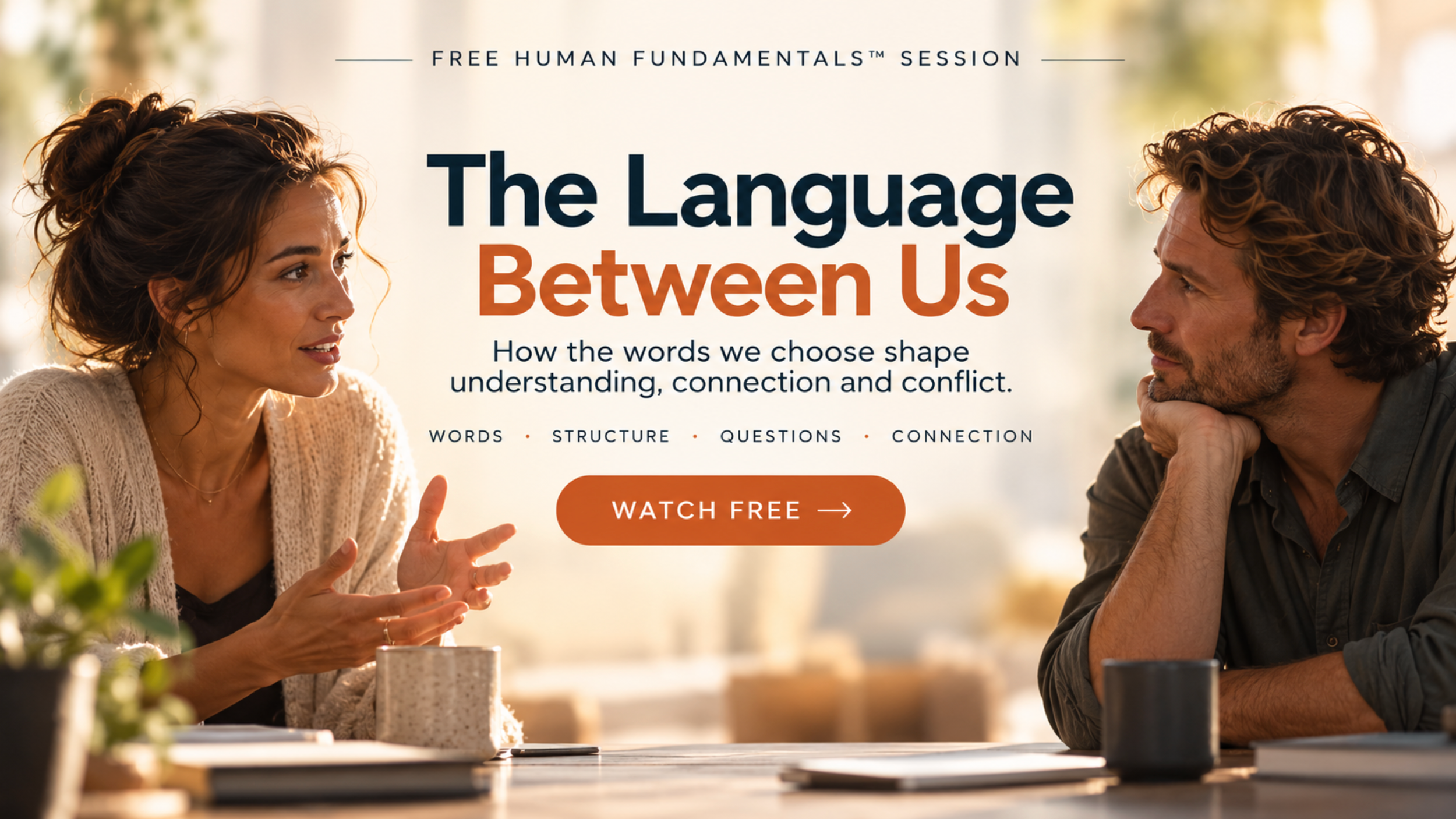
Free Human Fundamentals™ Communication Session
The Language Between Us
Understand how the words we choose can build connection or create conflict, and how small shifts in language, structure and questions can change the direction of a conversation.
In around 30 minutes, explore how we use language to communicate what we think, feel and need, why what we mean isn't always what another person hears, and how to communicate more clearly and constructively without watering down your message or trying to please everyone.
Words · Structure · Questions · Interpretation · Connection
Get immediate access
Enter your details below and you'll go straight to the free session.
Free · On-demand · Around 30 minutes · No preparation required
There’s more happening in our words than we realise.
We use words to express what we think, feel, need and mean. But underneath them can sit emotion, intention, assumptions, past experiences and different interpretations, all influencing how a conversation unfolds.
When we don't understand what's happening beneath the words, it's easy to communicate something differently from how we intended, misinterpret what someone else is trying to say, or turn a conversation into conflict without really understanding how we got there.
In this session, we'll explore four fundamentals that can help us understand and use communication more effectively:
In around 30 minutes, explore how to:
This isn't about finding the perfect words, avoiding disagreement or trying to make everyone happy. It's about understanding what we're doing when we communicate and having more choice in how we do it.
Because sometimes changing how we communicate something can change what happens next, without changing what we need to say.